

Submit your question to Kiki, LV’s sex and relationship advice columnist. Questions may be edited for clarity and length, and may appear either in print or online.

Flashback sequence! Recently, Kiki answered audience questions at Little Village’s inaugural Roast of Des Moines. The rapid-fire Q&A was a blast, but there was one question that deserved further ponderance. Kiki will address it for that steadfast follower here:
When Meat Loaf said he would do anything for love but not “that,” what was he referring to?
Much ado has been made over this song, which can easily be read as enigmatic and abstruse. But, dear readers, this is Jim Steinman we’re talking about here, not Thomas Pynchon. The song is actually pretty explicit about what it’s referencing — it’s just that no one wants to believe it because it’s so phenomenally stupid.
Meat Loaf’s greatest strength as a singer was his perceived earnestness, so it’s easy to see why his fans and even his detractors would try to parse some deeper meaning, some attempt at poetry — at least some self-effacing self-reflection. “I’d Do Anything for Love (But I Won’t Do That)” is not a song that benefits from an abundance of sincerity.
Here is the complete list of things that Meat Loaf will not do for love, as found in the lyrics:
“do it better than I do it with you”
“stop dreaming of you / every night of my life”
“forget everything … see that it’s time to move on”
“be screwing around”
To put it bluntly, Steinman Rickrolled us all. Meat Loaf is vowing never to give his lover up, let them down, run around or desert them. (Rick Astley’s hit was released six years prior.) But it’s honestly a bit worse than that. Because the reason we all get so confused by the song is the adamant insistence that he would not do those things for love. This leaves us two possible interpretations.
The first is that the Loaf truly believes that some sad sack might actually ask him to leave them because they feel unworthy of him. That is, he’ll never indulge his lover’s self-destructive attempts to sabotage the relationship by pushing him away. It’s certainly not hard to imagine him possessing that level of delusional arrogance.
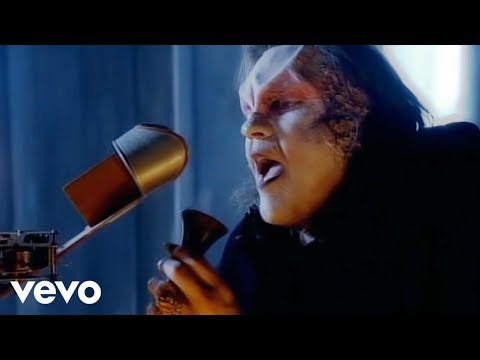
But this is Jim Steinman we’re talking about here. When you look at the broader context of all the work he and Meat Loaf did together, it’s obvious that the character they were building was one that used sincerity as a tool. Everyone knows “Paradise by the Dashboard Light” is an epic troll about lying to get laid. No one takes the protagonist of “You Took The Words Right Out Of My Mouth” at face value.
Overall, the tongue-in-cheek playacting of it all reads better in 1977 on Bat Out of Hell than when Bat Out of Hell II: Back into Hell was released with this track in 1993. By the ‘90s, people really were singing about their feelings with actual utter sincerity. And even though this was Meat Loaf, and even though this was Jim Steinman, a lot of listeners overlooked the obvious truth:
He wouldn’t do those things for love. That is, when he eventually does those things, it won’t be for love at all. It will be because Steinman brought 1970s “sincerity” to a 1990s sincerity fight, which meant poor Meat Loaf’s overacting was no longer over-the-top enough to be interpreted with a wink.
xoxo, Kiki
This article was originally published in Little Village’s June 2025 issue.
