


Editor’s note: Dolenz’s May 24, 2024 performance and meet-and-greet at the Surf was rescheduled for Friday, Sept. 13 at 7 p.m. The headline of this article has been updated with the new date.
When Micky Dolenz sets foot on the stage of Clear Lake’s Surf Ballroom, the last living member of the Monkees knows that he’ll be standing on hallowed ground. This venue was the final place where Buddy Holly, Ritchie Valens and the Big Bopper performed just hours before their plane crashed in 1959 during a snowstorm, an event immortalized as “the day the music died” in Don McLean’s 1971 single “American Pie.”
“I can’t wait,” Dolenz told me. “I’ve been asked to play there a couple of times, most recently when my friend Albert Lee invited me to celebrate his 80th birthday there, but I had a gig somewhere else in the world. So, I’m really excited because it’s obviously an iconic place, and not just for the obvious unfortunate reason it is famous for.”

During the height of the Monkees’ fame in the second half of the ’60s, Dolenz’s group gave the Beatles a run for their money, in terms of record sales and frenzied fanbases. They cranked out hit after hit with promotional help from their top-rated television program, The Monkees, which debuted in 1966 and aired through 1968. The wheels fell off after a battle over creative control with the show’s producers, who wanted them to shut up and keep singing pop songs written by other songwriters, karaoke style.
Instead, the Monkees opted to make the mind-bending psychedelic satire Head, a 1968 film and soundtrack album that flopped commercially before both gained second lives as cult classics. By 1970, the band broke up, and Dolenz, Mike Nesmith, Davy Jones and Peter Tork went their separate ways before reuniting in varying configurations beginning in the late-’80s — culminating in an implausibly great final Monkees album, Good Times!, released in 2016.
Given that this Monkee is touring on the heels of his recently released album of reimagined R.E.M. tunes, his show “Micky Dolenz: Songs and Stories” functions as a kind of living history of the rock era, from its ’50s roots and the ’60s youthquake to the rise of alternative music in the ’90s.
“Now that I’m the Last Man Standing,” Dolenz said, “I’ve had to evolve my solo shows to some degree. So, if you’re a Monkees fan, you will not be disappointed because I was blessed to have sung most of the Monkees’ big hits — not all, but most of them — so I have made it a point over my career to always do the hits that people know.”
“They’re going to get ‘I’m a Believer,’ ‘Last Train to Clarksville,’ ‘Pleasant Valley Sunday,’ and others. I don’t do truncated versions or medleys, I do them exactly as people remember them because I think that’s very important. And then over the years, depending on the venue or the size of the crowd — how intimate it is — I’ll tweak the show by adding non-Monkees songs that I have some cool story or connection to.”
For example, he was in the audience at the storied venue the Troubadour in Los Angeles when Elton John made his American concert debut there in 1970, so Dolenz plans to tell that story before launching into a cover. (“I’m not going to tell you which song it is. You’ll have to be surprised.”) He also has tales to share of hanging out with the Beatles in London and other magical musical trips that he experienced back in the day.
Dolenz’s younger sister Coco is part of his band, and the two have been weaving their blood harmonies together since they were kids. Around the time of her most recent birthday, they played the Troubadour together, which brought back memories of the Monkees’ early days.
“It was a fun, great venue,” he reminisced. “Back then, the Troubadour was the major hang for my crew, my group of people. It was very folk-rock oriented. The first time I met Mike Nesmith, he was the Hoot master at the Troubadour on Monday nights, when they had a Hootenanny, which basically was an open mic night. I remember when we were being cast in the show, we went down to see Mike do his Hootenanny thing and sing some songs.”
Coco also sang backing vocals on a few Monkees tracks, like Dolenz’s song “Midnight Train” from Headquarters, so when he started to do solo shows in the ’90s, she became part of his band and has remained with him to this day.
“She’s always highlighted doing a couple of tunes on her own,” Dolenz said. “For instance, and we’ll do this at the Surf Ballroom, I tell the story about Mike Nesmith writing ‘Different Drum’ and how the show’s producers didn’t want him to do it as a Monkees tune, so he gave it to Linda Ronstadt and the Stone Ponies. So, I tell that story, and Coco sings ‘Different Drum.’ You know, frankly, she’s a better singer than I am.”
Given that he was part of the “Pre-Fab Four,” a derisive nickname for the Monkees, he doesn’t really like doing cover tunes unless they have a resonant backstory or they’ve been reworked in interesting ways — like on his 2021 album Dolenz Sings Nesmith, which was produced by Christian Nesmith, who is Mike Nesmith’s son.
“Christian is just very imaginative,” he said. “He is the kind of producer who plays almost every instrument, and he is very unique, just like his father — and, yes, I’ve known him since he was in the crib. Christian did an amazing job reimagining those songs and giving them a twist, treating them in a different way. Now that’s fun, but just doing a cover tune like it’s karaoke, well, that does not interest me.”
And why not, exactly?
“The simple answer is because my life has been a karaoke!” he laughs. “No, I don’t mean literally, but that sort of thing just doesn’t interest me, you know?”
When 7a Records expressed interest in releasing a follow up to Dolenz Sings Nesmith, they discussed different possibilities, and when the topic of R.E.M. came up, Dolenz was intrigued.
“I had heard the stories of them being inspired by the Monkees when they wrote ‘Shiny Happy People,’ and I went, ‘Wow, let’s look into that!’ Then Christian got onboard, and he said, ‘Leave it to me. Let me listen to their catalog and see what I can come up with.’ And he came up with incredible versions of those songs. It’s just amazing, you know? And it turns out that R.E.M. loved them so much.”
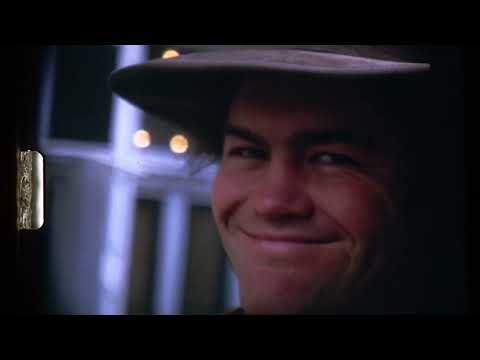
On their version of “Shiny Happy People,” Nesmith’s dizzying arrangements and Dolenz’s multitracked vocals put the ba-ba-ba back in baroque pop, breathing new life into what many believe is the band’s most annoying song (even frontman Michael Stipe came to loathe it). Another highlight is “Radio Free Europe,” which unexpectedly folds in on itself during the bridge before it returns to the propulsive postpunk pace that marked the band’s indie debut.
“These songs are absolutely incredible,” Stipe wrote in a statement announcing the release of the album. “Micky Dolenz covering R.E.M. Monkees style, I have died and gone to heaven. This is really something. ‘Shiny Happy People’ sounds incredible (never thought you or I would hear me say that!!!). Give it a spin. It’s wild. And produced by Christian Nesmith … I am finally complete.”
Kembrew McLeod is an OG Gen X fan of R.E.M. and the Monkees.
