


Brian Quijada is an Emmy-nominated playwright, actor and composer. He also happens to be a University of Iowa Theatre Arts alumnus, getting his start as an undergrad that ended up double majoring in English and Theatre.
Quijada has returned to Iowa City for a visit culminating in a performance with collaborator Nygel D. Robinson on Hancher Auditorium’s Club Hancher Stage. LV theater columnist Kristy Hartsgrove Mooers talked with Quijada about his roots at UI, his success since undergrad and how telling his specific immigrant story has become a mission statement.
This interview has been edited for length and clarity
What made you decide to apply to the undergraduate program at Iowa?
I went to Iowa because the College of Education was really good. When I was graduating high school, I was a theater and choir kid. When I told my parents that I wanted to pursue theater, they were like, “absolutely not.” [Laughs] So I thought I could get my education degree and then minor in theater, and then teach in the Chicagoland area, you know? I could be the English teacher that teaches the after-school theater program.
I was fulfilling my English requirements and taking all my pre-courses to get into the College of Education while I was performing in Reefer Madness, and Alan MacVey [the former chair] pulled me aside and said, “I hear that you’re leaving … Well, we encourage you to stay.” So I ended up dropping my education pursuit and ended up becoming an English major and my theater minor turned into a double major.
I feel like that’s how we get a lot of majors. We just draw you in: “Come to the dark side. Horrify your parents.” I was also going to ask about being a first-generation college student. How did your parents take it? I think your brother’s an actor too, isn’t he?

Yeah, I had that meeting with Alan MacVey, and then I ended up switching and applied for a scholarship Alan told me to apply for, which I ended up getting. So when I told them, they were upset. But I could say, “I’m getting money, y’all!” And in their minds they were like, “You’re getting money to stay in the theater department, but you’re going to pay for it later in your life.” But I think in a weird way, my parents’ disapproval and lack of belief that theater was a financially viable career has been a very good thing for me because my entire professional career has been trying to prove them wrong. It set a nice little fire under my seat that made me be like, “No, I’m going to try to make them proud and show them that they were wrong.”
Clearly they pretty much were!

It’s cool. My older brother is also in theater. Which is also why they were like, “Please don’t. Not another one.” [Laughs] “God, we came here. Why would you guys do this to us?” But once they saw us both on TV, my brother was on Chicago P.D. and Chicago Med, and I was on SVU recently, and once they saw that, I think they started to get it.
There is something about the television stamp of approval. I’m a professor of theater, but my family is always like, “Yeah, but what have you done?”
Right? It doesn’t matter, it’s not real! [Laughing] When they could finally have our relatives in Texas turn on the TV and watch, then it was real.
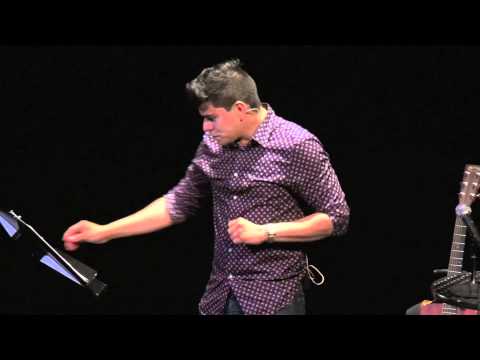
So you’ve written Somewhere Over the Border, you’ve written Fly Me to the Sun, you’re touring Mexodus. How many productions do you have going right now this year?
A good fair amount, I mean … it’s unbelievable, because I remember writing Where Do We Sit on the Bus and performing it and then people being like, “Alright, so. Cool! Great job. What’s next?” And I was like, “What? That’s my life story!” I’m kind of mind blown because a lot of those plays are very personal. My grandmother play, the puppet play that I just did [Fly Me to the Moon], it’s so personal. It’s about my family, you know? I feel like I exploit my family stories so often. [Laughing] My parents are proud. They’re like, “Oh yeah, where is my story being told now?” You know what I mean? My mom is always like, “Who is playing me this time?” So it’s cool that I can tell them the play about them is being produced in Pennsylvania. I can say, “Dad, Where Do We Sit On the Bus just had a great run at the Denver Center.”
I love the fact that you have managed to make something universal by being so specific about your family experiences. It sounds like even audiences that have no experience of being a first-generation American, or being Salvadoran, we’re all still getting so much out of all of your plays because they’re family stories that are relatable to everybody.

That’s actually become a bit of a mission statement. I’ve done more writing on why I’m writing, because I feel like it was important to define that for myself. But for me, it felt like when I was doing Where Do We Sit On the Bus, there was a poem that I wrote that is about three-fourths of the way into that play called “Let Them In.” And it’s this call to arms, to look at the hypocrisy of how we view immigration in this country. Like, if we don’t believe in “give me your tired and your poor,” then we should not be all proud that we have this green statue, this emblem of immigration. And we should take it down, then! If we don’t actually believe in this, then why are we so proud of it, you know?
I would perform that piece, and people would walk out of the theater. People walked out in Idaho, people walked out in New Jersey, people walked out in New York. [At that point in the show] they had watched at least 45 minutes to an hour of me, like, you know, being a charm ball! Just baring my soul. But [they heard that and] they’re like, you know what? No. I don’t care for it.
I’m just that way, I could have a million people stand up and say great job, but like a couple people that walked out or that I couldn’t reach? Those are the people that bother me and I’ll think about them. I’m interested in communicating with them, I’m interested in reaching that audience that doesn’t necessarily agree with my politics. I want to be able to actually remove the politics out of it and look at this human issue. I mean, I don’t see my parents and their coming to this country as a political statement. I see the people that raised me, that are good people that needed to come to this country to build a better life.
Anyway, all to say that Somewhere Over the Border is a mashup of my mom’s story and The Wizard of Oz because I feel like you can’t not root for Dorothy! You know these characters, you love these characters and maybe that might be the entry point to empathy for immigrants. Mexodus is literally an immigration story. It’s just a reverse border story of an American, maybe not an American person in the eyes of the law, but just as much as American as anybody else crossing that exact same border into Mexico in search of a better and safer life. So, a lot of my work tends to deal with immigration and the border. Because I am trying to pay tribute, I guess. Pay respect.
I love that you are doing this with your artwork and like kind of putting the pill in the cheese…
Oh my God. Putting the pill in the cheese! [Laughs]
And the pill is going to make you feel better! And the cheese is delicious! So great. Everybody wins. So, I think it’s gorgeous that you started out with this literal conversation in the 3rd grade, like, a Salvadoran kid honestly asking, “Where did we sit on the bus?” And the teacher just said, “You weren’t involved,” and turned back to the board. But now that moment has inspired this entire line of … how many plays have you written at this point? Like 10 plays? I want to ask you, did connections that you made at Iowa ever help you in your career while you were coming up?
The most. I mean, it goes without saying that the playwriting program at Iowa is so great. And you know, the first two or three years out of school I spent at the National Playwrights Conference and the Eugene O’Neill Center working on plays that I worked on at school.
Yeah, because you were with Idris [Goodwin], right? You guys went to Eugene O’Neill, right?
And Basil Kreimendahl, working on a play called Orange Julius. And so I think having an elite group of artists that I was colleagues with [at UI] … One: it allowed me to break into a little part of the new play system. And two: even as an actor it was teaching me about playwriting structure and form. I got a lot of actual hands-on training from seeing all of these friends develop their plays and seeing what worked. And you know, becoming a savvy new play actor, asking the right questions and understanding what was helpful. So I owe a lot to Iowa and my friends and colleagues, like everybody that was in school.
I feel like the advice that I always give is to find your tribe, y’all! The people that you’re in school with will be your confidantes. The people that you lift up and then lift you up. I feel like that is for sure what happened for me and I am so grateful for that.
I feel like people underestimate the fact that we work with so many new plays here and a lot of the students are like, “yeah, but they’re the galleries and I wanted the mainstage,” and I’m like, you want the galleries! You will make connections with people that are going to be the next Brian Quijada, the next Jen Silverman, the next David Adjmi, you know? Like, that’s how that works! Get in there and learn how to work on new plays, because a lot of actors never get the opportunity to do that while they’re in undergrad.
Right. All due respect to Who’s Afraid of Virginia Woolf, but I’m just like, [those plays have] just been done already. You know what I mean? Like, at this point I’m spoiled! Just give me the new play, give me the brand new thing to work on, it’s more exciting. And you can feel yourself on the precipice of making the next great American play.
Yeah, so speaking of Mexodus [see what I did there?] What made you decide that was the next story you were going to tell?
have a notes app. Now that people are like, “You write plays!” and I’m like, I guess I do… [Laughs] I collect stories that I think are to varying degrees potentially really good plays. And I think it was in 2018, somebody posted on Facebook an article “The Little‑Known Underground Railroad That Ran South to Mexico” and I remember reading it and being like, “Oh my God, what? How have I never heard of this?!” But duh, of course, there was an Underground Railroad that led south to Mexico. Mexico abolished slavery 30 years before we did. Why wouldn’t there be contingency of runaway enslaved people that went South from Texas? All they had to do was cross the Rio Grande and they were safe. But it stayed on my notes app for a really long time because I’m like, I’m not going to write a slave narrative alone. That’s not my story to tell.
So it stayed on my phone for a really long time until I met my collaborator Nygel D. Robinson, who is also another actor/musician who was like, “I’m in the Johnny Cash musical right now.” You know, another person who was feeling like they were not quite sure that their skills were being seen, you know.
Right.
So I saw him playing all these instruments and asked him, “Have you ever looped?” And he said no, and I asked, “Can I teach you?” And he said, “Of course!” So we had a little jam session and then I was like, “Do you want to write this play with me?” After meeting him once!
I love it!

It could have turned out to be awful, but it was amazing. So I said let’s write this, and that was three weeks before the shutdown, the pandemic shutdown. So a few months in I got a call from New York Stage and Film, who I had worked with before on another play. And they’re like, “Hey, we have some money to support some artists. Do you have an idea?” And I literally just met Nygel one time, but I pitched her the play! And she was like, “OK, you wanna write it?” And we wrote it over a year with the hopes that a year later we would present it in person, and that’s exactly what happened.
But yeah, I think that idea came out of feeling like I think there is a story to tell here that nobody has heard about, and it is within the realm of things that I’m very passionate to talk about. And then also it’s in the zeitgeist right now, hip hop and country-western … and so I feel we’re tapping into some sort of under-told stories of Black and brown solidarity. You know, typically a theater season is filled with your August Wilsons and Dominique Morisseauses or it’s In the Heights and your Latino plays. And it’s like, wait a minute, what if there was a way we could intersect them?
And that’s exciting to me. It’s like what you said, the more specific you get the more universal it seems? Like, how does white supremacy actually bring Black and brown people together? We really need to look at what these two cultures and races are fighting against, you know what I mean?
And just speaking the truth about what actually happened! Because we have our history textbook narratives and they have been bled of so much important detail. Once we know the truth we can start making educated decisions about how we actually want to vote.
Yeah, because if you don’t know it, like — I have family in Texas, and there are a lot of people there that are like, “Better close those borders!” And I’m like, if you knew the stolen land that you are on. The murders, the pillaging that happened on the very land that you’re on. The border moved. Some Mexicans became American because the border crossed them. And if you don’t know that history— It’s so frustrating. Like, would you vote the way that you vote if you knew? If you actually did the research?
And that history is also not that far away. Nygel says in the show, “I’m like one or two generations removed from this.” America is just a brand-new country basically. It feels like it’s really far away because we’ve made a lot of incredible steps forward, but we’re not that far removed from this.

I just have to say, I think your playwriting is absolutely part of how our culture is going to continue to take steps forward, and I know it’s going to lead to good things. I love that you are making these granular connections with individual audience members, in the same way that your plays are about something really specific so that they can be universally relatable and moving for everybody. I just feel like you’re really in the pocket, creatively speaking. I’m so happy for you and so excited to see the show.
So they have you set up to come to classes and hang out in the Theatre Building, right?
I think we’re meeting with the actors, directors and the writers. Which is good. I think it’s particularly important, because I think the industry has changed. Before, people were either directors or actors or writers, but now I think it has become a little more OK that you can be multidisciplinary. You’re not clouding the waters if you do a bunch of stuff. Like, our director [for Mexodus] also costume designed, and he originally didn’t think he should! And I was like, “Why? You can and we want you to!” And the costume design is amazing!
And so I think it’s important to go across all the disciplines. Sometimes directors fall into the same thing that actors fall into, which is like you’re looking to attach yourself to a playwright, because you and I are the ones who are creating the piece. You’re directing it, but I’m just like— it’s important to go to all the different disciplines. You can bleed! It’s all gravy. It’s a way to get a sense of control in a very uncontrollable career.
And I think about the fact that a lot of high school students want BFAs because they think they want to just focus on acting, but I think these days you are better off with a BA that trains you as a generalist. I mean, if you can get into the BFA at Michigan or Julliard, of course. Just go. But I think a BA will serve most people better in the long run.
Right? I never thought that sound design would be something I would want to do, that I would be so incredibly moved by it. That’s the exciting part of going to a school where you have to be a light board operator once in a while. Where you have to learn and try everything. That is so good and healthy. Because it also makes you value all your co-workers and respect what they do. I’m so happy that Iowa was such a truly pivotal place for me to come out of. I can’t wait to come back and see everyone.
